

Starting Pitcher Matchup
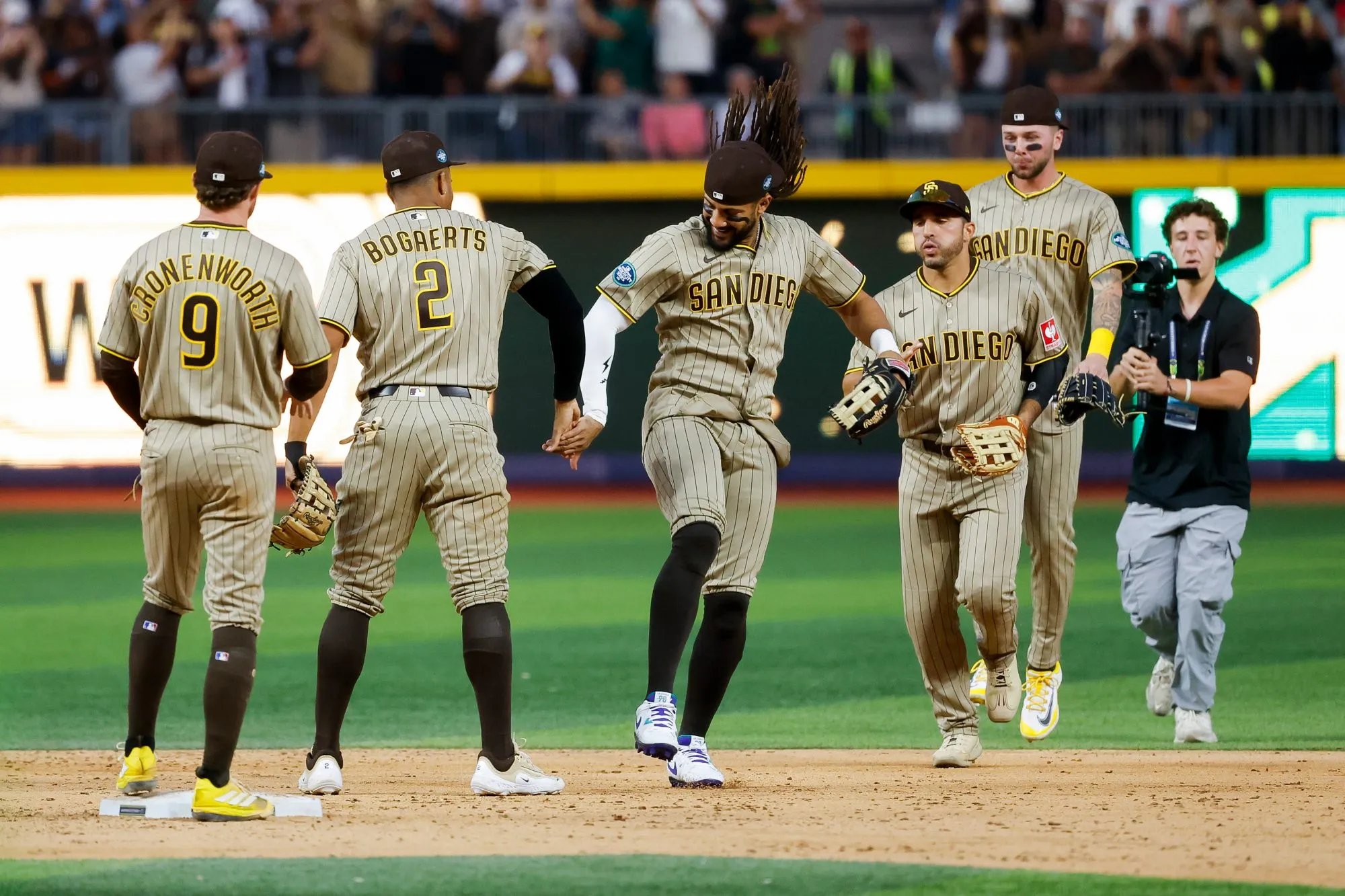
The pitching story tonight is an asymmetry, not a duel. Chicago has a known starter with a real track record; San Diego doesn't have a listed starter at all, which almost certainly means a bullpen game or a low-leverage opener carrying the first couple of innings before a parade of relievers takes over. That's the cleanest analytical edge in this matchup, and it has to be weighed against the one wrinkle that complicates it: Matthew Boyd is coming off a 6-earned-run, 3.2-inning blowup that was severe enough to flag him as struggling.
Boyd's body of work is genuinely good. Across 31 starts he's posted a 3.21 ERA and a 1.09 WHIP, the latter a number that sits in the elite tier for any starter, and he's been efficient enough to average 5.79 innings per outing. The walks haven't been the issue (a 2.10 BB/9 rate), and he's been the kind of pitcher who lets his defense work behind him at one of the most pitcher-friendly venues in the game. The two starts before his disaster — 5.2 IP with 1 ER and 4.2 IP with 2 ER — are closer to who he's been all season than the 6-run inning that put him in this article. That said, the disaster is recent and it's the data, not noise to be ignored.
San Diego's mystery rotation slot is the bigger swing factor. A bullpen game means more arms, more matchup-driven swaps, and more variance — both directions. Without a designated starter, the Padres' run-prevention picture defaults to whoever is fresh and whoever has favorable handedness against the Cubs' top of the order, and that's a structurally weaker setup than handing the ball to a rotation regular. Even if the individual relievers are sharp, three or four of them in a single game tend to compound walks and hard contact in ways a single starter doesn't.
Lineup and Offensive Context
The Cubs come in with the deeper top-to-bottom group. Alex Bregman is anchoring the lineup at .822 OPS with 18 home runs and 51 walks — the kind of disciplined, plate-coverage approach that works against a bullpen game where command is uneven. Moises Ballesteros has been the small-sample story at .868 OPS through his first 20-game stretch, and Miguel Amaya's .814 OPS with 4 home runs in 28 games gives Chicago a third real offensive piece in their top group. The top-three OPS averages out to roughly .835 — a meaningful number against a patchwork pitching plan.
San Diego's lineup carries Jake Cronenworth and Xander Bogaerts as the anchors, and the underlying numbers don't match the team's 18-9 record. Cronenworth's .744 OPS and 69 walks fit the patient veteran profile, and Bogaerts at .719 with 11 home runs and 20 stolen bases is still useful, but neither bat is the kind of plus contact threat that Chicago has at the top of their card. The top-2 OPS averages roughly .732. The Padres are scoring 4.5 runs per game while allowing 5.0 — that negative team run differential despite the strong record is what tells you the underlying performance hasn't fully matched the standings line.
The Cubs' +33 run differential and 8-2 record over their last 10 games sit on the opposite end. They got shut out 0-6 by the Dodgers in their most recent outing, which broke a hot stretch, but one bad night doesn't unwind the underlying offensive profile.
Moneyline: Chicago Cubs to Win
Back the Cubs. The structural edge is the SP asymmetry — Chicago has Boyd's 3.21 ERA and 1.09 WHIP body of work; San Diego has a TBD bullpen game. Layer in the Cubs' deeper offensive top tier (three .800-plus OPS bats vs. zero on the Padres' side) and the Cubs' +33 run differential against San Diego's negative one, and the directional read points at Chicago even at Petco. Boyd's last start is the real risk in the picture; if he turns in another 3.2-inning short outing, the Cubs' bullpen carries the rest of the way. The 31-start track record says that's an outlier, not the new baseline.
Total: Under 7.5 Runs
Lean under. Petco Park is one of the most pitcher-friendly venues in the league, the total of 7.5 already reflects that compression, and Boyd's full-season WHIP of 1.09 suggests a starter who keeps the bases mostly empty when he isn't blowing up. San Diego's lineup OPS profile sits below average at the top, and a bullpen game against Bregman, Ballesteros, and Amaya is more likely to produce a manageable run total than a slugfest. The case against the under is the Padres' bullpen variance — more arms means more walks, and Boyd's last start is the floor scenario that tilts the game high. If you trust the season profile over the single-game outlier, the under is the cleaner read.
Run Line: Chicago Cubs -1.5 (consider)
The run line follows naturally from the moneyline plus under combination. If the Cubs win in a low-scoring game, they tend to win by 2 or more in the projected 5-3 outcome. It's a low-conviction add — Petco run lines are volatile and one Padres home-run swing rewrites the math — but worth flagging for size.
Final Score Prediction
Chicago 4–San Diego 3
The Cubs win by leveraging the SP asymmetry into a manageable middle-innings lead, and Petco's compression keeps the total just under 7.5. Bregman gets on base twice, the bullpen game gives back at least one big inning, and Boyd projects for 5.5 IP / 2 ER if his last start was the outlier the season profile suggests it was.
Injuries and Availability
No significant injuries reported for either team as of the data pull (2026-04-27T13:42:46Z).
All odds from SX Bet as of 2026-04-27T13:42:46Z. SX Bet charges 0% commission on straight bets. Stats sourced from ESPN. Injury data sourced from MLB Stats API, current as of 2026-04-27T13:42:46Z.
Bet this game on SX Bet — the peer-to-peer sports prediction market. 0% commission on straight bets, settled in USDC.